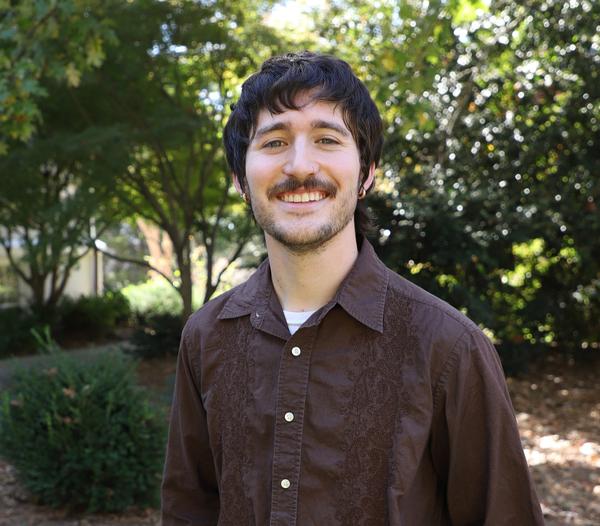
Luke Bowles (BowlesBugs) Multimedia Science Communicator

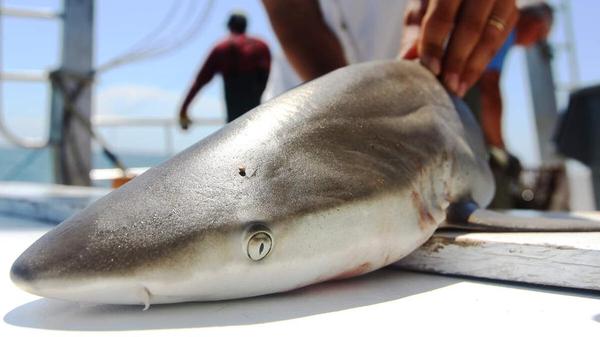
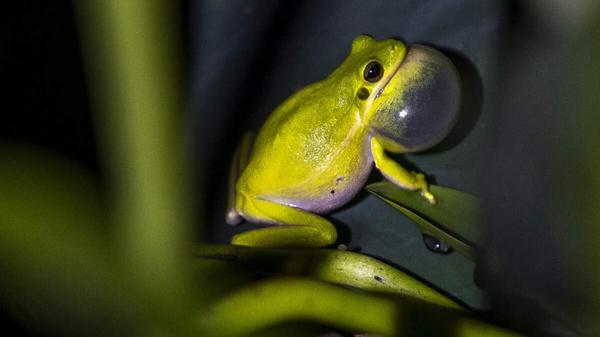
Telling stories about science is my passion. Whether it's videoing frogs mating at a local park, trudging through scorching dunes to see endemic butterflies, or helping scientists squeeze shark heads for a story, I'm up for the challenge. I have experience in writing, producing, teaching, outreach, field reporting, and social media where I make videos under @BowlesBugs. I hope you enjoy!

Recent Work

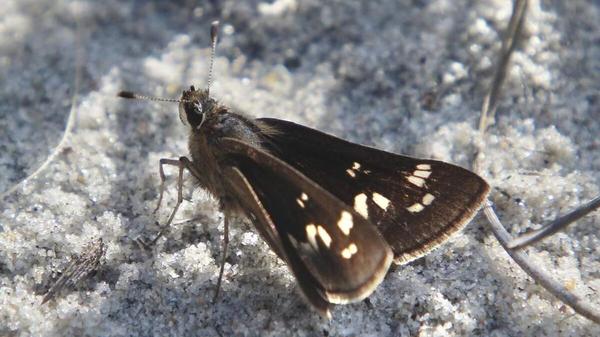
As its caretakers move on, a rare NC butterfly’s fate hangs in the balance

A woman walking on the boardwalk at Fort Macon State Park stopped when she saw Laura Taylor wearing long-sleeves and a cargo vest sagging under the weight of myriad gadgets despite the 95 degree heat.

“Have you had any luck?” she asked. She added, “Thanks for doing what you’re doing.”

Taylor, a PhD student at NC State University, said moments like that happen more than people might expect. Strangers already know about the crystal skipper, a small brown butterfly found only along a 30-mile stre...
A Raleigh salamander exists nowhere else on Earth. Development is killing it.

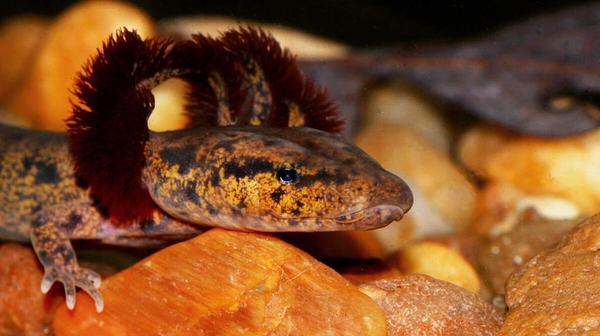
South of Raleigh, where Johnston County’s subdivisions creep into former farmland, Swift Creek looks like an ordinary stream — slow, brown-green, unremarkable. But it is remarkable in one way: It is home to the Neuse River waterdog, a fully aquatic salamander found nowhere else on Earth beyond a narrow stretch of North Carolina’s Neuse and Tar River basins.

The Neuse River waterdog (Necturus lewisi) grows up to a foot long and sports a reddish-brown body dappled with blue-black spots, but its m...

NC’s rarest salamander was hanging on by a thread. Then Helene hit.

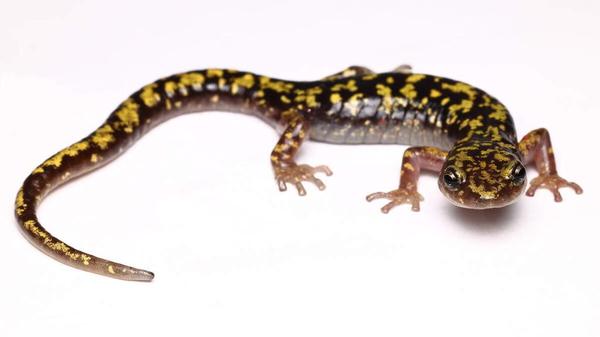
JJ Apodaca sent the drone up over the ridge because he had to see for himself.

It had been a month since the remnants of Hurricane Helene brought torrential rain to the mountains of Western North Carolina, and the only road into Hickory Nut Gorge was gone.

Apodaca climbed the next mountain over, launched the drone, and watched the screen as it crossed the valley toward one of his best sites, a rock face holding roughly 10 percent of the known population of a salamander found only in this gorge...

2 people, $275,000. NC lawmakers decided this environmental program was too much

When the N.C. Office of Environmental Education closes its doors, more than 200 partner organizations will lose the main channel they use to reach teachers and the public, while over 600 educators working toward the state’s environmental education certification will be left in limbo.

Gov. Josh Stein signed the $34 billion 2026-27 state budget on July 7, cutting the $275,000 needed to keep the office running. After an unsuccessful push to restore it through a technical corrections bill, the offi...

In a Durham food desert, wastewater becomes a tool for advocacy

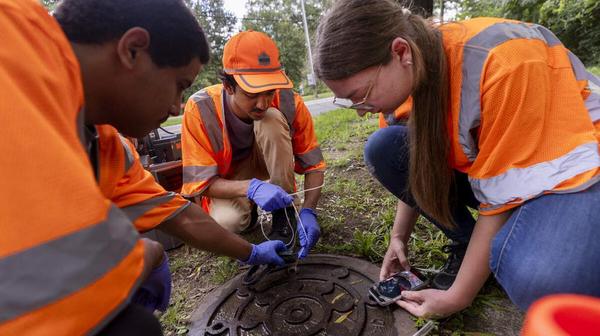
On a road downstream of Grant Street in Durham, a large gray cylinder sits atop a manhole cover, sucking up sewage water every hour — and potentially changing the fight against food insecurity for this historically Black neighborhood.

Duke University researcher Lawrence David is hoping his lab, Edible Atlas, can help Grant Street with an unusual tool: the ability to read a neighborhood’s diet from its sewage.

Grant Street sits inside Durham’s historic Hayti district, once a thriving center of...

A turtle’s best friend? How dogs are saving North Carolina’s tiniest turtle

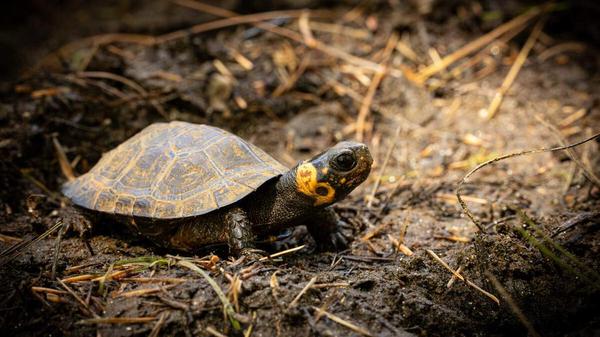
Noses down, tails up, two Labrador retrievers zigzag through a soggy mountain wetland in Western North Carolina, hunting for a prize humans would need a lot of luck to find: North America’s smallest turtle.

This July, three conservation groups enlisted a team of dogs to do what wildlife biologists struggled to do for years — track down the bog turtle, a threatened species so small it can fit in the palm of a hand.

The Nature Conservancy (TNC), the Amphibian and Reptile Conservancy (ARC) and th...

How rain, a daycare teacher’s tip and grit led to discovering NC’s lost bats

It was 11 p.m. on a remote mountainside in the Nantahala National Forest, and bat biologist Katherine Etchison was sitting in a truck, waiting out a pouring rain. Three hours past their start time, a coworker asked if she was ready to call it a night.

She wasn’t.

“We have nothing else to do,” Etchison told them on that June 8 night. “This is what we came here to do. We’re safe. We’re in the truck.”

Etchison, a wildlife biologist for the N.C. Wildlife Commission for over 11 years, had gotten r...

How pesticides are breeding resistant mosquitoes in wealthy Wake neighborhoods

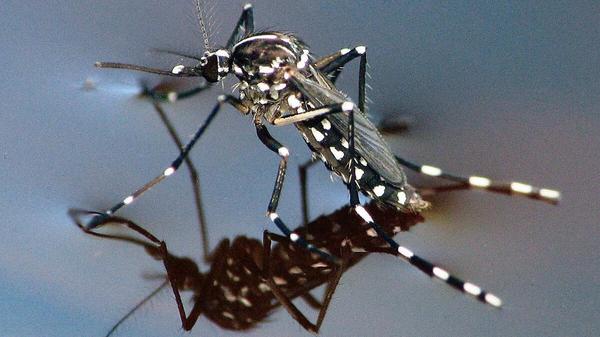
Mosquitoes in Wake County are rapidly evolving resistance to the insecticides most commonly used to kill them, according to two new studies from NC State University. The trend is strongest in wealthier neighborhoods where residents spray more often.

Researchers tracking the invasive tiger mosquito (Aedes albopictus) found that a genetic mutation making the insect resistant to pyrethroids, the group of chemicals used in most backyard mosquito sprays, went from undetectable in 2016 to present in...

An ark for the unloved: This Raleigh lab breeds the state’s rarest aquatic species

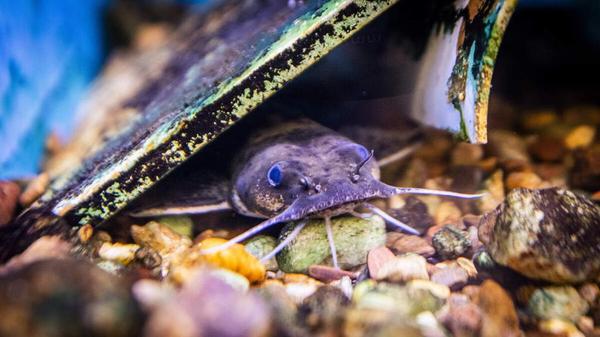
Finger-sized catfish with venom-packed spines and dark blue eyes back into modified clay pots, wary of their looming observers.

This is Noturus furiosus, the Carolina madtom. In the low hum of pumps and filtered water at a lab south of downtown, a small team of biologists is trying to keep it — and a handful of its obscure, imperiled neighbors — from becoming a fish only seen in photographs.

The federally endangered Carolina madtom was historically found in two river basins in North Carolina a...

It took 60 years to name this rare NC fish. Now the state can act to save it.

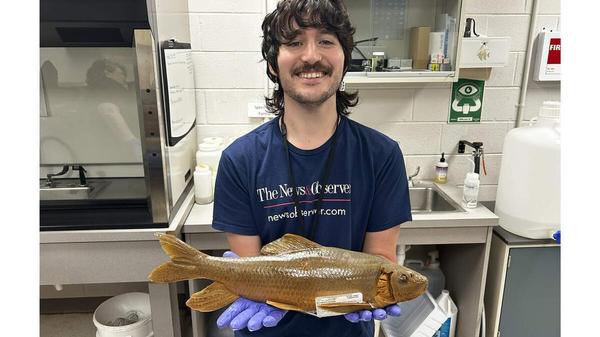
​Glowing with amber-orange hues and fitted with lips only a mother could love, several rare sucker fish sit in jars of ethanol at the N.C. Museum of Natural Sciences.

Scientists first collected this species in 1961, yet it remained nameless for over 60 years, becoming rarer and rarer in its natural habitat.

That all changed in April, when scientists from the Raleigh museum formally described the fish, meaning they published a scientific paper to prove it’s distinct from other closely related s...

Mary-Dell Chilton, NC biochemist who revolutionized agriculture, dies at 87

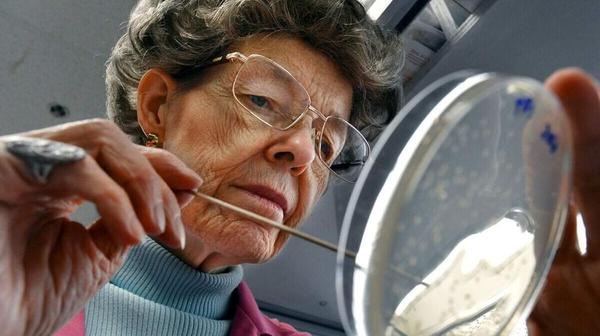
Mary-Dell Chilton was determined to challenge a prevailing scientific theory: that a bacterium could alter the genes of trees.

But as she set out to prove the theory wrong, she instead discovered its truth — and in the process, helped turn science fiction into reality. Chilton, who died at 87 on Wednesday, June 24, at her home in Carrboro, led the team that created the first genetically modified plants, a breakthrough that would eventually lead to crops with increased yields and drought resista...